
A western swing
The Nature of PEI by Gary Schneider
I had the absolute pleasure of visiting the western part of the province early in July. Whenever I make the trip, I wonder why I don’t do it more often. At a workshop in June, a very kind soul had asked if I would want to walk her property, as it had lots of interesting plants that I would appreciate. So, off I went.
I didn’t find the elusive ironwood trees, as post-tropical storm Fiona had made finding our way to that part of our woods impossible. But we did cross paths with lots of eastern white cedar, white ash, and round-leaved dogwood (one of our rarest native shrubs). One native plant that I actually wish was a little less common was all along the trail. I’m not a fan of poison ivy, though I assume it has a role to play in our ecosystem. Unfortunately, I’ve come out on the losing end of a few encounters with this plant.
The old saying “leaves of three, let it be” makes sense as a general scare tactic to keep people safe from this plant (though there are harmless plants with this leaf configuration). But my most humiliating encounter with this plant occurred many years ago when no leaves were present. It was on a Christmas bird count in December, when there was no catchy phrase to help me avoid doing damage to myself.
I came upon a plant with dry yellow berries, which were unfamiliar to me. As always, I collected them without knowing what they were. Not long afterwards, my arms were blistered from the chemical that seems to be in all parts of the plant. It was a painful lesson that taught me to be more careful when collecting.
While up west, I paid a visit to Black Marsh, one of my favourite places in the province. The very walkable, 5.5 km trail starts at the Wind Test Site at North Cape and meanders below the windmills. About half the trail is a boardwalk, making the experience extra special, and runs into an unusual natural area. Most bogs are in low-lying areas, whereas Black Marsh is perched on cliffs well above the shoreline. It is a great place to watch a wide variety of birds, from woodland warblers to sea ducks.
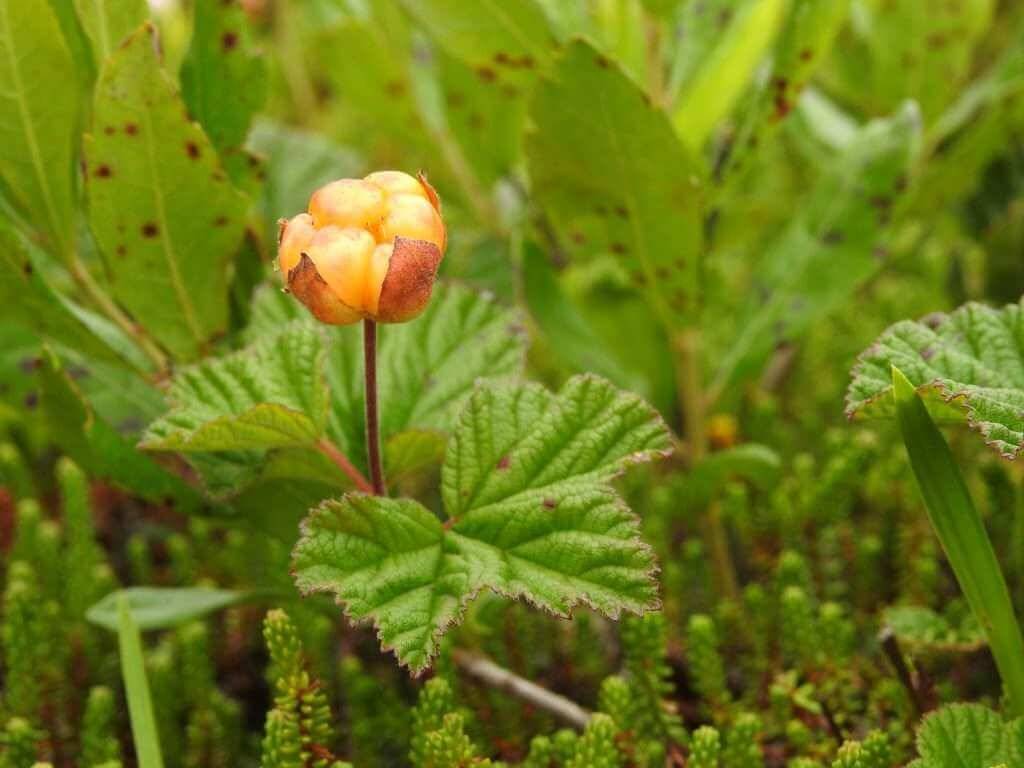
The gorgeous grass pinks and rose pogonias were in their glory, while the pitcher plants were a bit past their prime. But I was seeking a different quarry—bakeapple. Also known as cloudberry, this small member of the rosaecea family is famous in Newfoundland and Labrador. The plant looks like a low-growing raspberry, except that the fruit is orange. They are prized for using in jams, jellies, pies, and even cheesecakes.
I’ve only found this plant on one other property in the province and am hoping to make this lovely native a little more common. I collected fruits a few years ago, brought them back to the Macphail Woods nursery, cleaned the seeds, and planted them in a bed. Almost immediately afterwards, I came across two research papers on cloudberry describing how difficult they were to propagate. Another example of leaping before I looked. But somehow we had a germination rate of about 80 percent, higher than many of the other species we propagate. We’ll try again this year and see if we can replicate that success.
As I tell anyone who’ll listen, a visit to Black Marsh should be on everyone’s bucket list, and I suspect that as always, the closer you look, the more you will see.