
Adding to confusion
The Nature of PEI by Gary Schneider
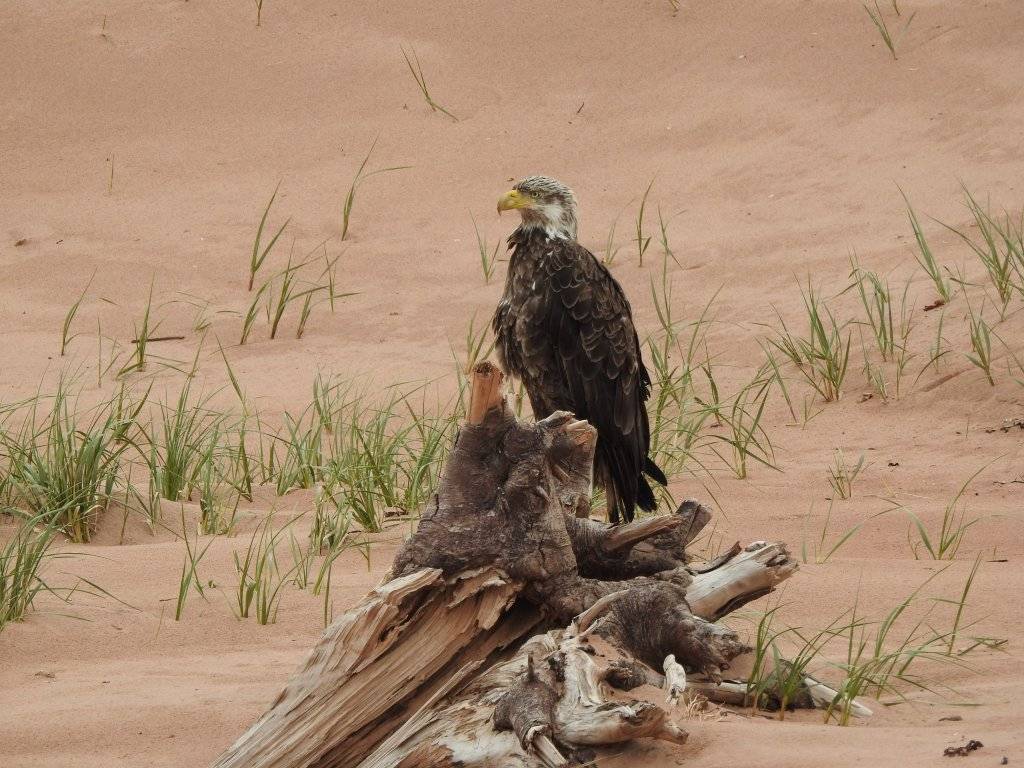
In the very olden times, I was part of the Idle Hands Book Store in Montague. I vividly remember carrying a nature guide with a lovely Bald Eagle gracing its cover. An American tourist asked me why we would stock that book when we had no eagles in the province. He was quite adamant about it, despite my protests.
True, America seemed to have done its best to eliminate eagles in many areas of the country, mostly through the use of a particularly noxious chemical pesticide. DDT was supposed to be a saviour for both farmers and the public—it killed so many pests of agricultural crops and helped control malaria that was spread by mosquitoes. Unfortunately, it caused a huge amount of damage to the environment.
Eagles and other scavengers and predators wound up ingesting DDT, which made their eggshells soft and prone to breakage. Along with habitat loss and hunting, this led to a marked population decline.
Canada finally phased out the use of DDT in 1990 and while we still have habitat loss, very little if any hunting of eagles still occurs. As a result, eagle populations soared.
Today, we see Bald Eagles across Prince Edward Island. We have almost fifty active nests in the province, including one at Macphail Woods in Orwell. It has become a very special teaching area (outside of the nesting season, of course). We take budding naturalists to the area and watch as they wonder about the weight of the huge stick nest, the range of skeletons below that the birds have discarded, and the size of feathers that have fallen.
But for new birders, eagles can be confusing. We all know that most male warblers put on a dazzling feather display during the breeding season. Appearances can and do change.
With Bald Eagles, it is a matter of age. We have an image in our minds of a huge bird with a wingspan of up to 80 inches (two metres), a black body with bright white head and tail feathers. Whether perching or in flight, it is hard to confuse this bird with anything else.
The identification problems occur with sightings of younger Bald Eagles. All ages have a fearsome look, with large talons and a powerful hooked beak. But immatures are quite ratty looking. Think of the adults as regaled in a stunning tuxedo, accompanied by their offspring wearing ripped jeans and an ill-fitting checked shirt. There is no “bald” head that makes the adults so distinct.
On a side note, I always thought that the name “bald” referred to the shininess of the adult’s head once the feathers became white. But the term is actually from the Old English word “balde” which means white.
As the young birds age, their body feathers get blacker and the head and tail feathers become whiter. It is generally around year five that we see the jet-black body and pure white head and tail feathers. When you see a white-headed eagle, you know for certain that it is at least five years old.
Younger eagles differ so much from the adults that they are often identified as another species. While we do have Golden Eagles occasionally visiting the province, most Golden Eagle reports turn out to be juvenile Bald Eagles.
I hope you get a chance to watch Bald Eagles across the Island, whether that is at the East Point Lighthouse or Cedar Dunes Provincial Park or the Montague River. It is always a special experience.