
Our lovely dogwood
The Nature of PEI by Gary Schneider
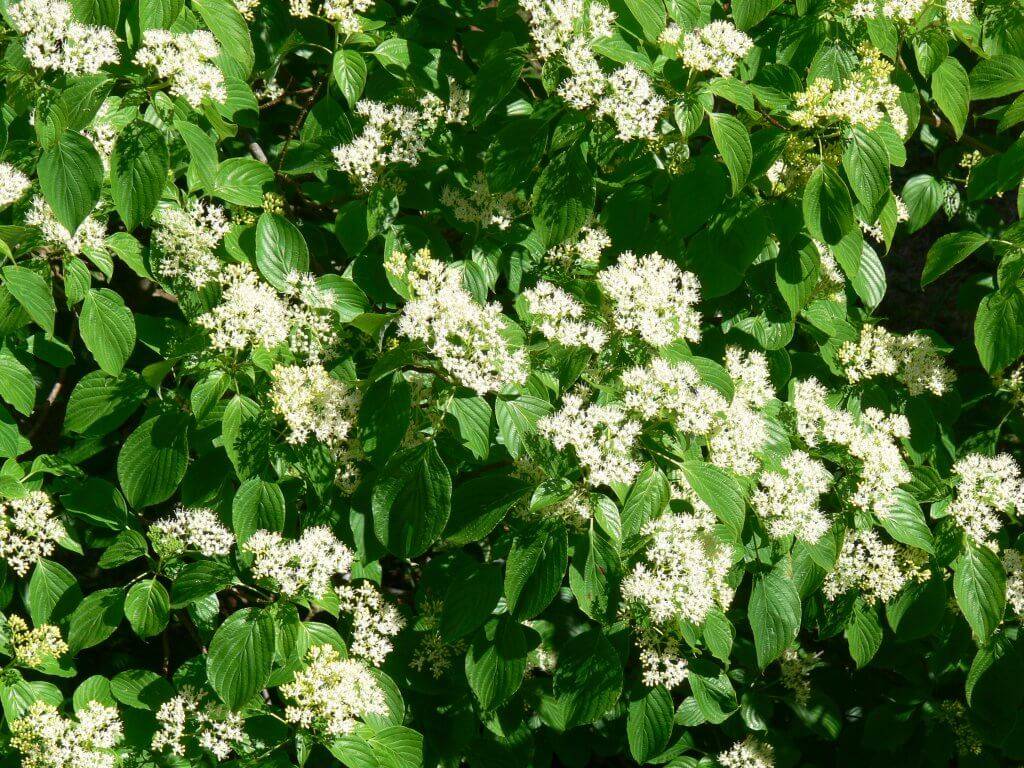
Perhaps the most cherished part of my yard in Tea Hill is a lovely alternative-leaf dogwood. It is a native shrub, home to mixed woodlands with relatively dry soil. This species helps make our woodlands more complex, providing a middle layer of habitat between the forest canopy and the ferns and wildflowers.
When teaching plant identification, I often get people to look at where the buds—or branches—emerge from the stem. These are either opposite (across from each other) or alternate (not opposite each other). This helps you to sort out information fairly quickly. If you see a tree with opposite buds, you immediately know that it is a maple or an ash.
Most times the placement of buds are consistent within the species. All maples are opposite, all willows are alternate. The common red-osier dogwood and the uncommon round-leaf dogwood have opposite buds. But the alternate-leaf dogwood took a detour along the genetic path and for some reason it’s buds are not opposite. Who knows why this happened, but it does make identification easy. When you find a dogwood without opposite buds, it has to be an alternate-leaf dogwood.
And how would you even know that it was a dogwood? If the plant is in leaf, this is almost a no-brainer. The veins in the leaf don’t head out to the sides, as you see in oaks or elms. Instead, the veins run out towards the tip. My (totally incorrect) way of remembering this is to think that the edges of the leaves are too hard for the veins to get to, so they curve off towards the tip.
If these shrubs are not in leaf, then you can look at the shape of the plant. It is often call “pagoda” dogwood, as it has a shape that reminds you of plants found in Japanese gardening. It grows up and then the branches spread out in a relatively flat whorl. Then it continues to grow taller, interrupted by these whorls of branches. It is a stunning plant.
The one in my yard—I take no credit for this beautiful specimen, it was planted by my partner many years ago—is about eight metres tall and in spring it is an incredible mass of white flowers. It really is a special plant. Once the flowers are past, it develops dark purple berries and are especially attractive to a wide variety of birds. Robins, vireos, black-capped chickadees and many more species all work to ensure that no berries are left on the shrub. Each year I’m sure there are thousands of berries on the one shrub.
While I take great pleasure in the beauty of this shrub, whether it is the form, the leaves, the flowers, or the berries, the wildlife that it attracts makes it a key part of the local landscape.
The Achilles heel of this native shrub is its susceptibility to Golden canker, a fungal disease that can cause parts of the plant’s bark to turn yellow and die. It doesn’t affect every shrub, but in some areas causes a lot of damage. The best way to manage it is to prune off infected branches early and either bury or burn them. Make sure to clean your pruning shears with a bleach solution between cuts to avoid spreading the fungus.
Other than that, it is one of our most beautiful native shrubs and well worth growing in wooded areas or around our homes. You won’t regret it. And the birds will thank you.