
Another super shrub
The Nature of PEI by Gary Schneider
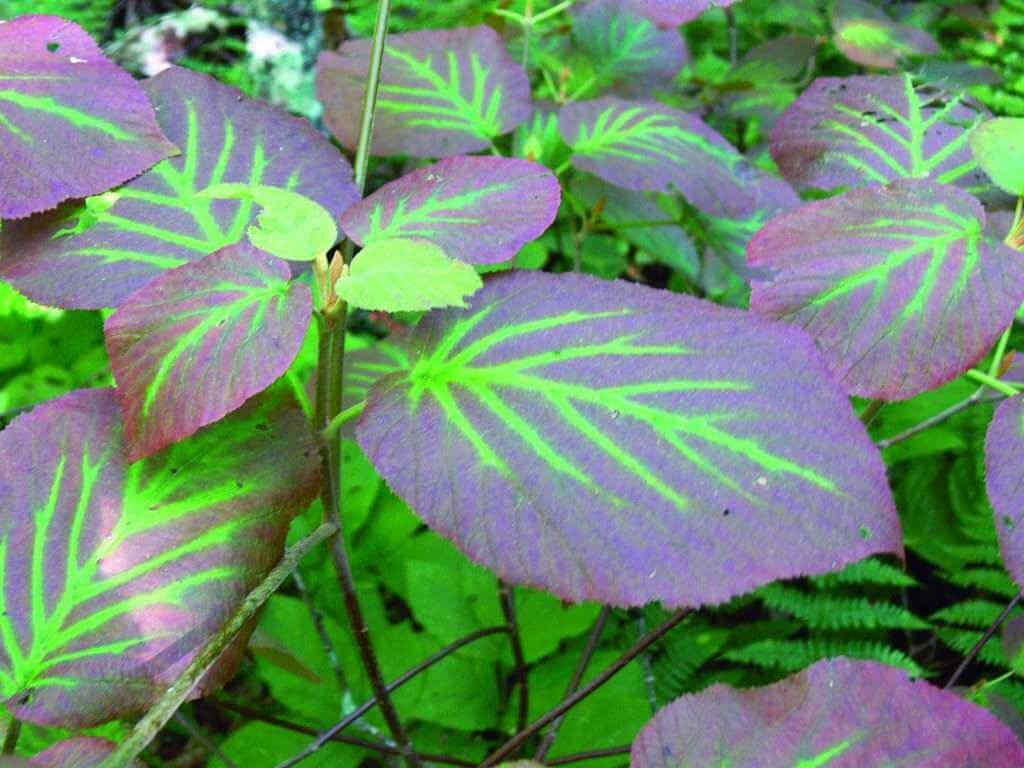
More than thirty years ago I was wandering through a lovely forest in Lewes owned by ex-premier Angus MacLean. Besides being a great person, Angus was clearly someone who loved his woodland. As we talked trees, I asked Angus if he ever came across hobblebush. He took me to a place along one of the trails where he was tip-layering the rare shrub.
Tip-layering is a means of vegetatively reproducing a plant by bending a branch to the ground, usually making an incision at the bottom, and mounding it with earth.If all goes well, roots start growing from the incision, and you can cut off the branch—voilà, a rooted plant.
Being a blueberry producer, Angus had the hobblebush branch bent into a bright yellow blueberry flat, which looked very much out of place in this lovely natural area, but it couldn’t be missed.
Angus taught me that another name for hobblebush is trip-toe, which I didn’t quite understand until a gang of hobblebush ambushed me on one of my seed hunts. Hobblebush naturally tip-layer when heavy snow or ice bend the branches down to the ground and they root there. Imagine walking through the woods and having a bunch of branches that hobble you as you walk through. I’ve literally found myself head over keister as one of my feet got caught in the trap.
For me, it was love as first sight with hobblebush and it remains one of my favourite Island shrubs. It is one of three viburnums that are native here. The other two—highbush cranberry and wild raisin—are also special shrubs, but neither holds my heart the way hobblebush does.
It starts in the spring, when the suede-like buds start swelling, finally bursting into flowers and leaves. The flowers are pale white clusters surrounded by bright white false flowers that attract pollinators. The large, heart-shaped leaves are sometimes as big as my head. And then the fruit comes out, changing from green to bright red to dark purple as they ripen.
But it might be in the autumn where this shrub attracts the most attention. You can see from the photo that when the leaves mature, some of their greenness is replaced by a dark purple. It is one of the most beautiful fall images that I have ever seen. Each leaf seems to be a work of art.
As for the plant itself, it is one of our rarest native shrubs, joining witch hazel and round-leaf dogwood as some of the hardest ones to find. And as I have discussed in past columns, this is not because it is difficult to grow but because we have destroyed so much of its natural habitat. It thrives in dappled light in rich soil, conditions that became rare with the clearing of so much forest for agriculture.
Hobblebush is a wonderful plant for wildlife, especially birds that are trying to fatten up their families in preparation for fall migration. American robin, Swainson’s thrush, hermit thrush, and cedar waxwings are just a few species that make good use of the fruit. Small mammals such as red squirrels and chipmunks also consume the berries.
And you and I? We can also eat the fruit, but only once they have turned dark purple and are fully ripe. They are not the most exciting fruit I have ever tasted but they are certainly edible.
Hobblebush is a native shrub worthy of our attention. We should be doing all we can to make this beautiful plant more prominent in our landscape.