
Water, water…
The Nature of PEI by Gary Schneider
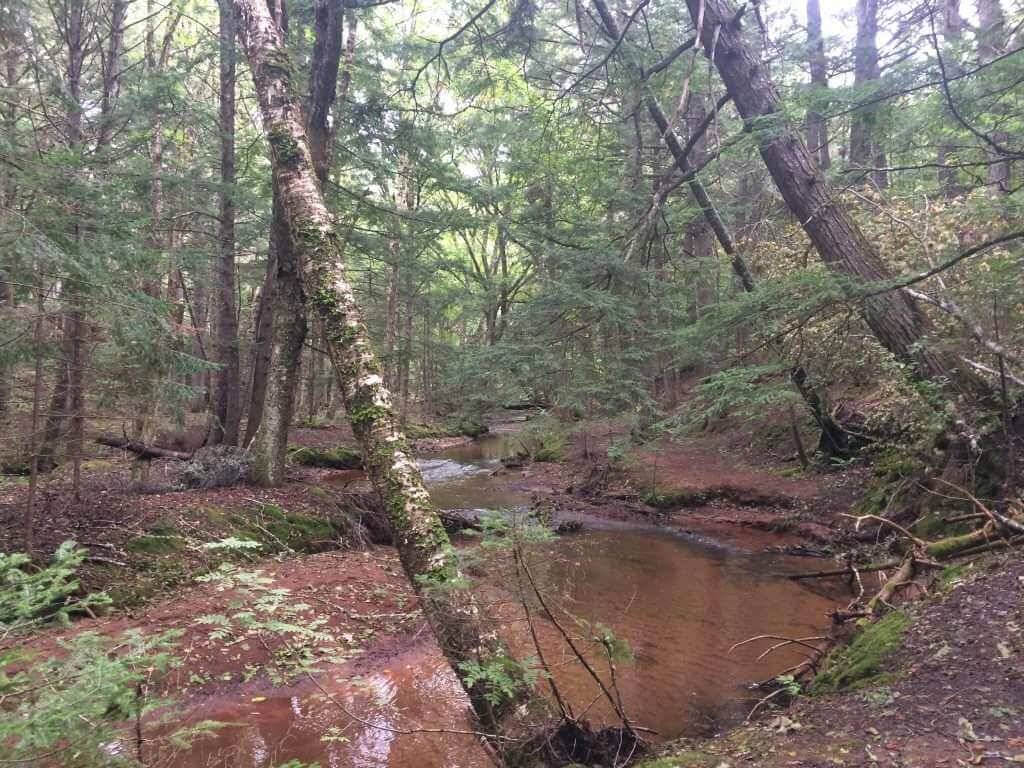
In a mostly frozen landscape at this time of year, my thoughts still often turn to flowing water—its beauty, its importance, its fragility. I continue to have an intimate relationship with the Orwell River, which runs through the Sir Andrew Macphail Homestead. It is a lovely waterway, home to large Eastern Hemlock and Yellow Birch, barred owls and bald eagles, and a myriad of other flora and fauna.
It is a lovely natural area but it is also full of human history. At one time it was very much a working landscape—there is still evidence of where Sir Andrew would bathe in that frigid water, and you can see where the river was once dammed.
Here is how Sir Andrew described the Homestead:
“The Farm was acquired from the Fletchers. The north and south branches of the Orwell River joined within the area, flowed in a deep wooded ravine, passed through the adjoining property, and met the tide where it was crossed by a bridge. Upon this stream were three mills. Heavy timber grew upon either bank. The stream now runs upon gravel and rock, through grassy meadows where mill-ponds once were, through gorges where with an unerring instinct the early settlers built their three dams, through the woods where trees have grown to immense size, protected by the high banks which prevent their removal. There also, as a neighbor observed, is all the accommodation a sea-trout could require.”
It is somewhat hard to believe that water was once such a critical source of energy in the province, driving mills to crush grain and saw timber. The rivers were also a key part of the transportation system and before the coming of roads were often how we moved things—including logs—from one place to another.
And for thousands of years before the European settlers arrived, the waterways were used by the Mi’kmaq, who had an uncanny ability to be part of an ecosystem without destroying it.
Today, we are trying to figure out that same role—how to part of the natural world. We are learning to understand how to exist within nature without destroying it. The buffer zones adjacent to our rivers and streams are incredibly important when viewed through a biodiversity lens. That’s where you can find winter wrens, kingfishers, wood ducks, and dozens of other birds. As for mammals, these are common habitats for beavers, mink, and raccoons. And amphibians are very common in these areas.
I worry about our waterways when I read about neonicotinoids—a pesticide that has a toxic effect on pollinators—being present in our streams. The headline in the October 29, 2004 issue of Canada’s National Observer read “In Canada’s potato province, streams run with pesticides.” That’s not the headline that “Canada’s Food Island” should be attracting. Our own provincial inspectors found the pesticide in amounts up to 4.5 times greater than the government’s safety thresholds. To date, there has been no enforcement action taken.
While no direct link to the potato industry has yet been shown, neonicotinoids are mainly used by the potato industry. It is probably too much to ask the industry to self-regulate, so if we are concerned about environmental health, pollinator decline, and diversity, government really needs to take immediate action on this threat.
We all want to have a healthy environment, and if that means finding other, less toxic ways to handle pests, that is what we must do. There are already plenty of threats to wildlife in this province—we don’t need any more.