Sharing Stories
Profile: Stella Shepard by Julie Bull
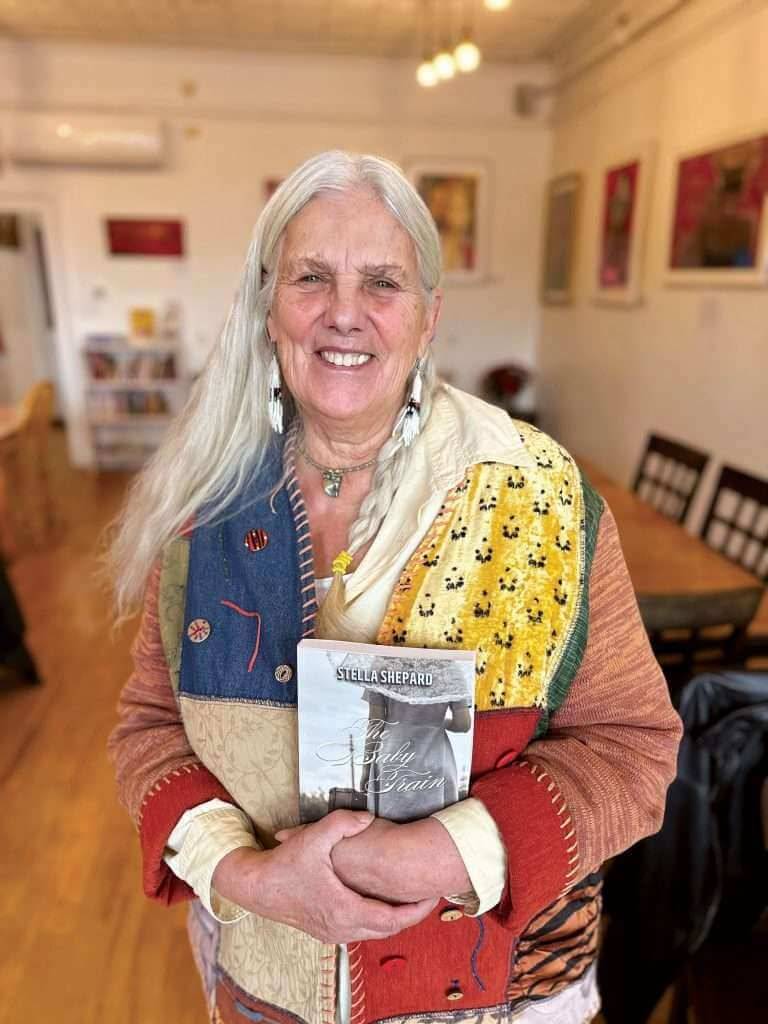
There is something extra lovely about meeting up with a storyteller on a chilly winter morning. Winter is storytelling season, after all, and I am so glad I got the chance to speak with Stella Shepard about all things writing and storytelling. One of the first things she said was: “I could write in my sleep, and maybe I do!”
Writing has been a close companion for Stella for decades. “Perhaps I even hide behind my pen sometimes.” In 1966, Stella’s mom gave her a five-year diary, and this became the start of Stella’s lifelong love of the written word. “Some of my ideas, thoughts, and feelings just come out differently and easier when I’m writing.”
There is no right or wrong way when it comes to writing and everyone who writes will find the processes and practices that best suit them. Predominately a flow writer, Stella does not create detailed plans before writing. “I know the general direction of the story and that there is point A and point B, the rest just flows.”
From her sharing several vignettes and stories from her life, Stella clearly connects to deeply emotional and spiritual places in her writing practice. “Sometimes I don’t know where it’s coming from, it is just flowing through me.” Channeling these spiritual connections, Stella pens stories that are part of our hidden histories. “The ancestors guide me to share the things I share because there is so much hidden history that people need to know.”
Stella proudly connects to her Indigenous and African roots and is committed to telling stories that have otherwise gone untold. Recalling a time that she met Maria Campbell, Stella carries and shared one of Maria’s teachings: “Our ancestors use us to tell their stories.”
Stella’s granddad and uncle were both excellent storytellers and she credits them and others in the family line for her love of storytelling. “Historically, our families used storytelling as both a means of sharing and a means of entertainment.”
Doing just that, Stella published her first novel, Ashes of my Dreams, in 2016. The semi-autobiographical historical fiction was well-received and brought forth many other women sharing their stories with Stella. “So many women were coming to me and telling me about the heart wrenching experiences they had.”
While hearing about those experiences, Stella learned of many other unethical practices that were undertaken at the time. For example, unwed mothers were the subject to non-consensual testing for syphilis. “My bones rattled with rage to learn that I was likely among those women.” The more stories she heard, the more she was compelled to create a way to share that hidden history. “It makes me wonder, what else has happened that we don’t know about?”
“I knew I had to do something with all these stories, and so, my second novel came to be.” The Baby Train was recently published by Acorn Press. Stella’s recalling of the both the process and product of this book was itself a powerful, raw, and healing journey. She talked about the ways some of the pain she and the other women felt were channeled into the ways specific characters were treated in the book. I was struck by how she used character creation in such a cathartic and healing way. “The book helps balance the scales and may be the only semblance of justice that some of these women get to experience.”
The book ends with a robust set of acknowledgements, including Stella’s dog, Oscar. “He was there on the couch with me as I was typing away.” Oscar was also instrumental in helping Stella remember to take breaks and have playful moments between the hard and heavy work of writing. There is a depth in Stella’s storytelling that she describes as “going beyond fact and fiction into the in-between spaces.”
A retired journalist, Stella has spent her life intimately involved with the written word. “I have fought the good fight for decades and now I’m ready to sit under a tree with a flower.” Deeply connected to the natural world, Stella draws her strength and connectedness from the land and waters she has known her entire life. “I really enjoy quiet time, alone time, nature time. How can I ever be lonely with all these lovely characters in my head?”
Writers often say that they are writers forever and the writing doesn’t stop with retirement. From the enthusiasm and breadth of ideas that Stella shared, her writing and sharing will continue. “I would like to keep telling the stories that need to be told, those stories that otherwise go untold into our hidden history.”