
Mountain ash
The Nature of PEI by Gary Schneider
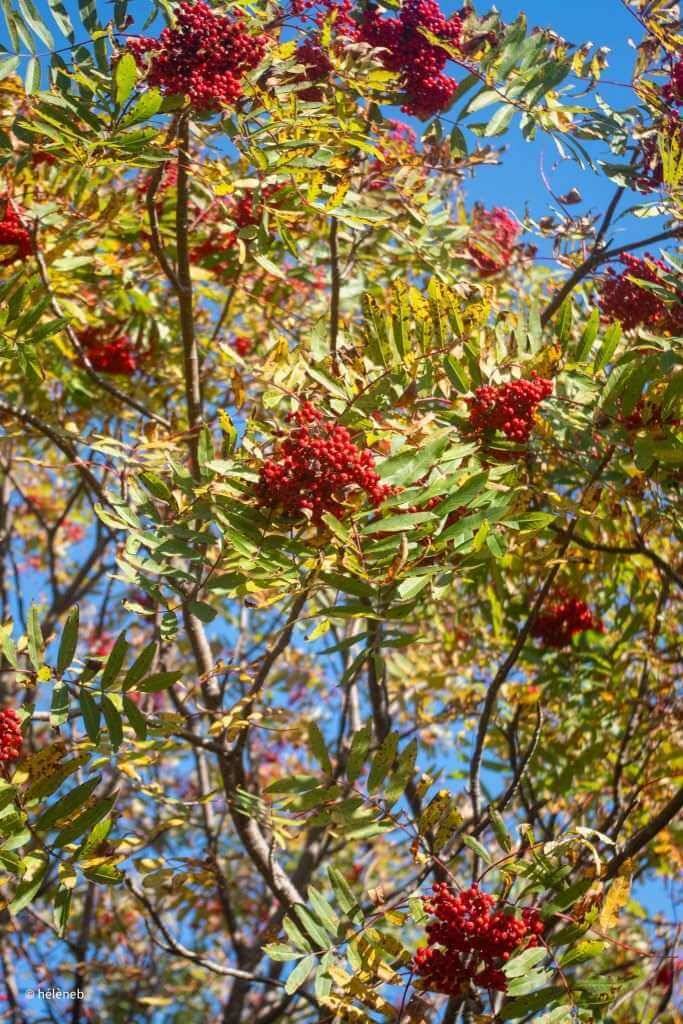
I love this time of year, whether I’m looking for birds or collecting seed, or—as I recently did—both. An early September trip to the East Point area was full of fall warblers, Bonaparte’s gulls and gannets. It is such a lovely area, and quite lively at any time of year. But perhaps the highlight of the trip was seeing the huge crop of native mountain ash berries on the shrubs along the road.
The dark orange berries stood out along most roadways in the area. To an inveterate seed collector, they were literally shouting my name, calling to be collected.
We can often tell something about where a plant is native from the name. Norway maple and spruce? Yep, Norway. Japanese larch? You got it, Japan. Austrian pine? No question, Austria. In this day and age, though, the actions of our neighbours to the south make me call into question some of our plant names.
One of our native mountain ashes is generally called American mountain ash for no good reason. When I see it now, I think of it as the lovely Canadian mountain ash, one of the fairest shrubs in the land.
The European mountain ash is far more common around the Orwell area and much of the rest of the Island. It was brought over as a domesticated plant and does add colour to the landscape and food for fruit-eating birds in the winter. But in my mind, it is a poor cousin.
Both species have orange berries and both have compound leaves that are alternately placed on the stem. They’re similar, until someone points out the obvious. The berries on the Canadian mountain ash are smaller and a much darker orange. The leaves were a little tricky until Kate MacQuarrie—always the wise teacher—pointed out that if you look at the leaves and they don’t jump out at you as being native, they’re not!
The leaflets on this native mountain ash are long and pointed, while those on the European version are short and more rounded. I guarantee that once you see them together, you won’t have any trouble with their identification.
You may wonder why I’m so enamoured with this mid-sized shrub. In the spring, it is quite attractive, with large, pale flower clusters. The summer leaves are lush and exotic looking. And the winter fruit is very special, with the deep orange berries held on dark red stems. But it is the bird life that this plant attracts that made me fall in love with it.
When there are plentiful crops on the mountain ash, we almost always get to see large flocks of robins, pine grosbeaks, Bohemian waxwings, cedar waxwings, flickers, starlings, and many other species of birds. One of the highlights of helping with the Christmas Bird Counts is seeing huge flocks of these fruit-eating birds, sometimes hundreds at a time. It really is special to be near large, mixed flocks of winter birds, all chattering and flitting from shrub to shrub. Small mammals— everything from squirrels to mice—also make good use of the berries.
Our other native mountain ash species—showy mountain ash—continues to elude me, though there are areas up west where it is supposed to be found. It’s another plant I’m not giving up on finding. If readers happen to come across any, please let me know. At Macphail Woods, we’re increasing diversity in the province one species at a time.