
Big fossil footprint
Possibley made by a plant-eating Pareiasaur
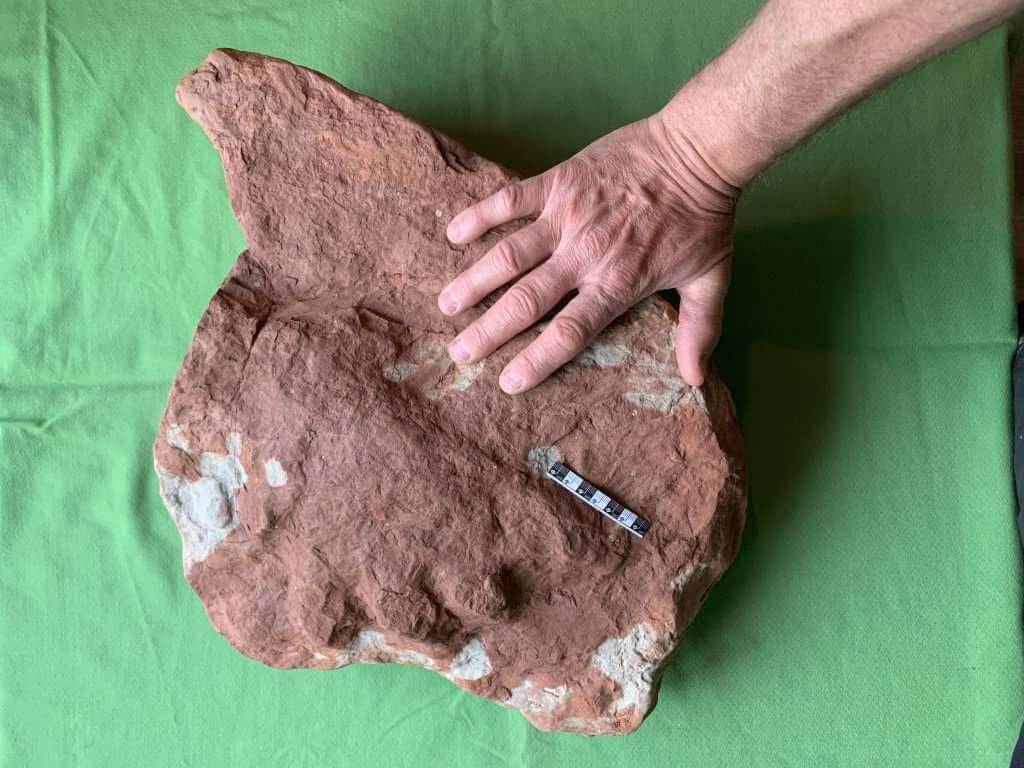
A remarkable fossil footprint has been discovered in PEI by a local and it shines a new spotlight on the province for its world-class Permian Period fossils.
Found along the shore of Hillsborough Bay, the fossil footprint dates back about 290 million years. The footprint is 25 centimeters wide and may have been made by a Pareiasaur, a heavily built, knobby-skulled plant eater that could weigh up to one tonne, the largest animal to roam the equatorial regions of Pangea at the time. This discovery adds to the growing number of fossils from reptiles and amphibians that once roamed the province millions of years ago.
“This is the biggest footprint I’ve ever found, for sure,” says North Rustico resident, Patrick Brunet, a self-taught scientist with a skilled eye for finding fossils. “I knew immediately it came from a really big animal, and it was really important.”
A team of international scientists including Patrick Brunet, and led by Dr. John Calder, lead investigator and advisor to the PEI Museum and Heritage Foundation, will work together to confirm what type of animal made the footprint.
“This one footprint is a mindblower, in its sheer size and due to the fact that nothing quite like it is known from this time, in the earliest Permian,” says Dr. Calder. “PEI will soon be seen as one of the most important sites for fossil footprints of life on land during this unique time in the earth’s history.”
Findings may show that this is the oldest known example of this type of fossil footprint ever discovered. When the study is complete, the fossil will return to the PEI Museum and Heritage Foundation where it will join the provincial collection.
Fossils and trackways from the Permian Period discovered across PEI have grown remarkably over recent years and now rank alongside world famous sites in the southwestern USA and in Europe. PEI’s red rocks hold the best record in Canada for the Permian Period.