
Amazing woodpecker
The Nature of PEI by Gary Schneider
The Northern Flicker is a noisy bird, no question about it. That’s not a complaint—it usually doesn’t wake me up in the morning nor keep me up at night, so I’m happy hearing its calls and drumming. It is just different from some of those shy, quiet and hard-to-see species. “Brash” is a good term to describe these woodpeckers. They’re a little larger than a Blue Jay and are the second largest of the species that we have in the province, after the crow-sized Pileated Woodpecker.
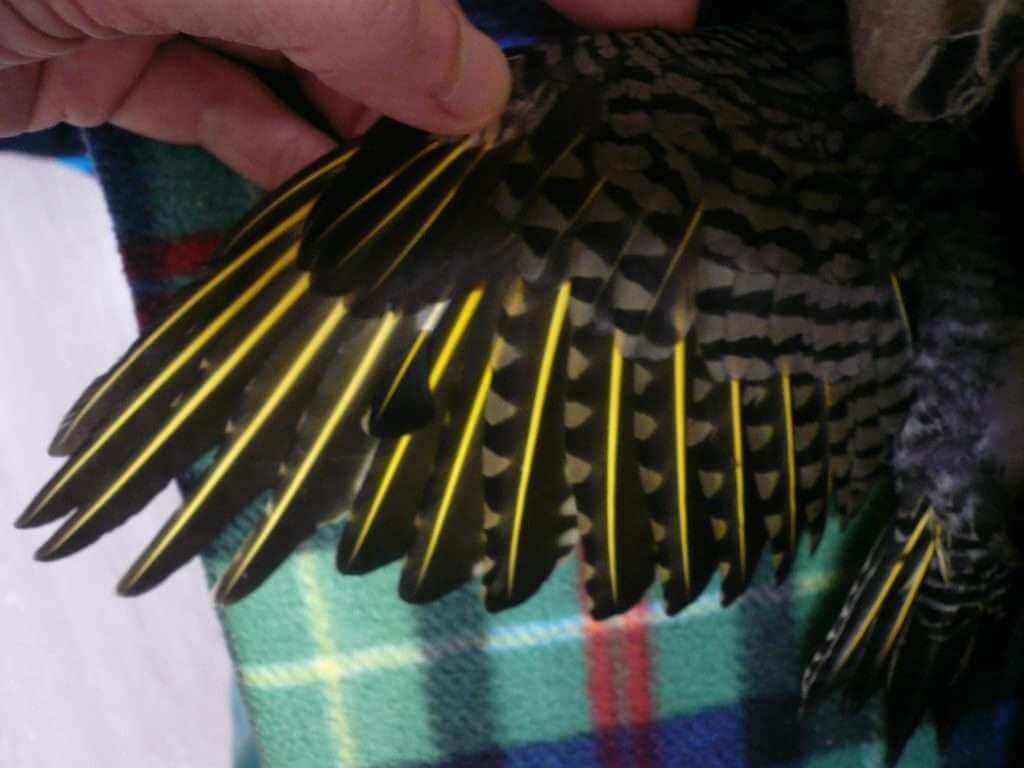
I was curious as to why this bird was called a “flicker” and there doesn’t seem to be a definitive answer. Some say it is from the distinctive call—“flicka, flicka, flicka.” But the actual, very loud call sounds more like “wicka, wicka, wicka.” Another source wrote about the flickering colours in flight from the feather shafts.
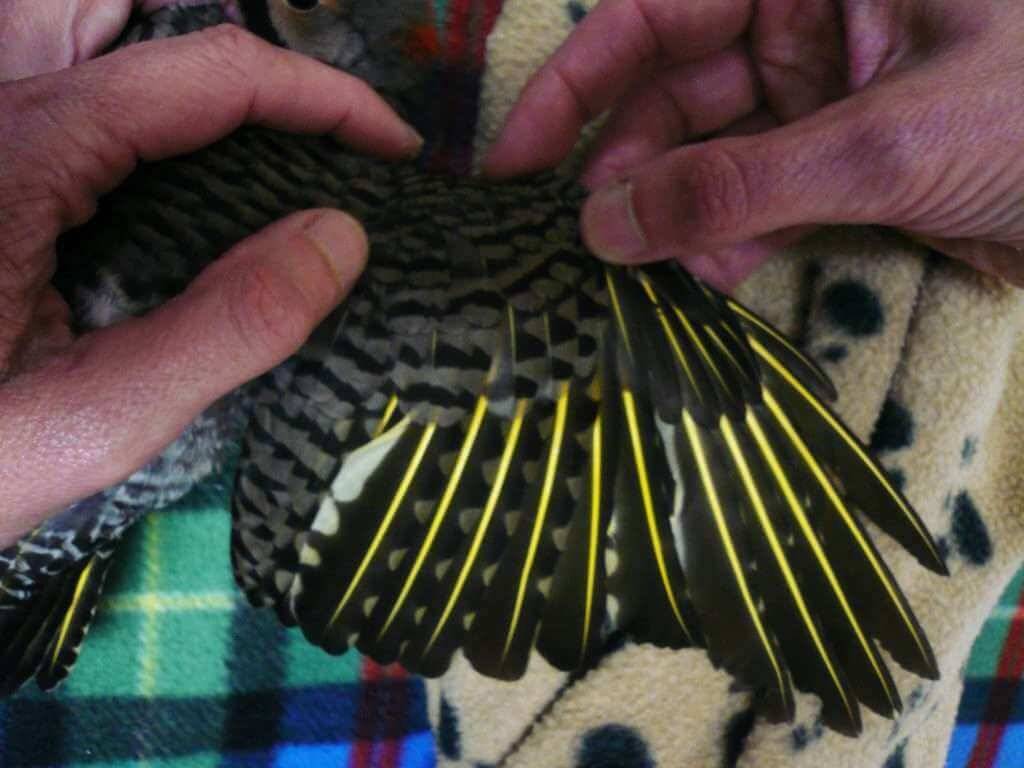
And of course, this led me to the two subspecies of this bird. The flickers in the east are Yellow-Shafted Flickers, while in the west they are Red-Shafted Flickers. The difference is the distinctive and bright colour of the shaft of the feather. When I was learning about birds, I’d read about Yellow-Shafted Flickers, and thought little about it as an identifier. But once we started banding birds at Macphail Woods and saw them close up, the yellow shafts were remarkable. It also makes for a clever common name—the yellowhammer.
Flickers are easy to notice. They have a bright white rump patch that flashes as they fly. Like other woodpeckers, their flight is best described as a series of “flaps” then a “glide”—once you get used to that, it is a real help in identifying woodpeckers. Overall, flickers are mottled, with black markings on a light breast and a darker back. They have a grey-ish head with a dark black breast band. The beak is large and slightly curved, useful for drumming (to attract a mate or to scare off other nearby males), drilling nest holes, or digging for food.
Like all woodpeckers, they rely on dead or dying trees where they can find suitable nesting habitat. But flickers mostly forage on the ground, sometimes in groups of ten or more on the fall migration, looking for ants, beetles and other insects. That said, their diet can be quite variable. I once watched a pair feeding for hours on ripe common elderberries.
Flickers are primary cavity nesters and the holes they create are often used by other species of birds and small mammals. Saw Whet Owls have hooked beaks with which they tear apart mice and voles, but are physically unable to drill their own nest cavities. Fortunately, they make great use of abandoned flicker nests. The same goes for our Northern Flying Squirrels. Again, these animals are ill-suited to drilling into wood, but often make use of old woodpecker nests.
Northern Flickers can regularly be seen from Spring into the Fall migration season. Most migrate south into the American states, though some stay around all winter, especially if there is a lot of fruit remaining on shrubs such as sumac and dogwood.
Flickers play an important role in the life of a healthy forest. It is not just the small owls and flying squirrels that benefit from their presence. They are one of the birds that actually spreads fungi throughout the woodland that help break down cellulose and release nutrients and organic matter back into the soil.
Like many aspects of nature, flickers play multiple roles in our ecosystem and contribute to the overall health of our landscapes.