
Wetland worth
[Photo by Becky Byrne]
As a self-confessed wildlife lover, wetlands have always been important to me. Some of my best outdoor experiences in the province have involved getting my feet wet. There was the time I was searching the edges of a bog for the uncommon Virginia chain fern, a plant I’d never seen before and one of our rarer native ferns.
Unfortunately, the plants were on the other side of the bog from where we entered. It was the only time in my life I wished my feet were bigger, big as snowshoes. I hit a soft spot and literally sunk to my hips! If my partner hadn’t been there to yank me out, I might have someday been PEI’s first bog person, preserved in the peat!
I’ve wandered the edges of many beaver impoundments, both at Macphail Woods and in other parts of the province. Besides beavers, mink, muskrats, and the occasional river otter, they can be great places to see a wide variety of beautiful migratory warblers. You can also find flycatchers, ducks, and herons.
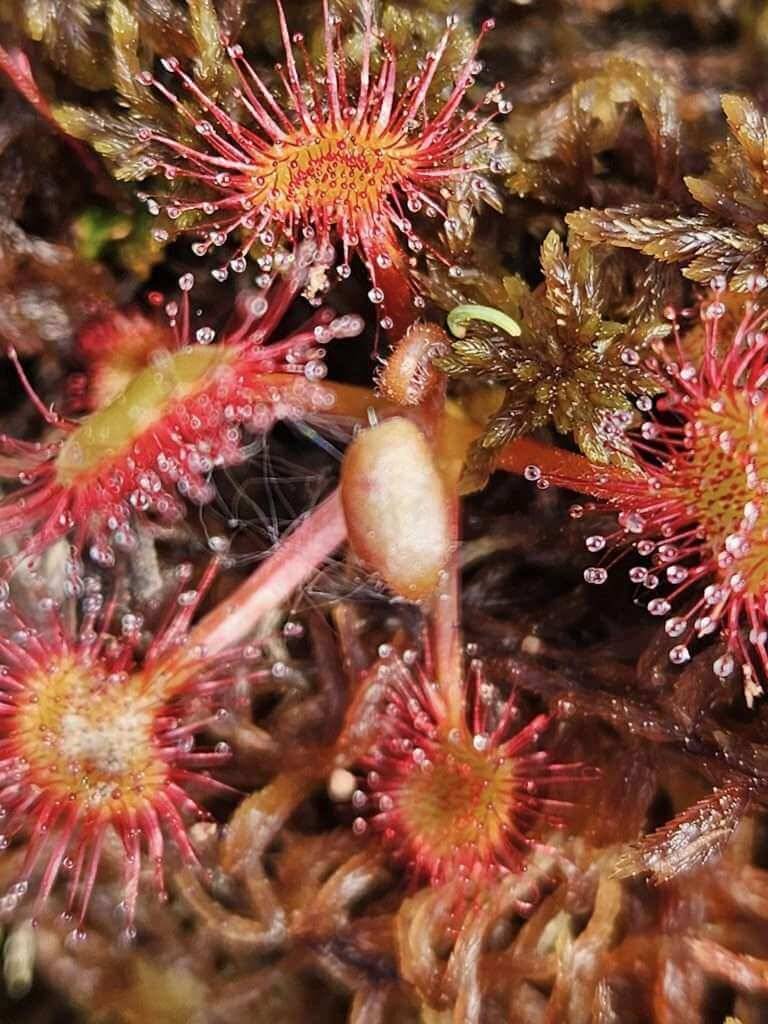
North Cape’s Black Marsh will always hold a special place in my heart for its wildlife, including a wonderful mix of rare plants. You can find everything from bakeapples and a host of orchids to carnivorous species such as pitcher plants and sundews. If you love nature, it really is a magical place.
But wetlands are important for much more than just being places to entertain bird-watchers and plant lovers. They are vital components of a healthy ecosystem.
Since we can’t farm wetlands, we too often think of them as wastelands—areas that we are not able to make money from. But the ecological goods and services that wetlands provide clearly show that they are both important and valuable.
Wetlands can store large amounts of carbon, which is becoming critically important given our present climate challenge. I remember when I first learned that peat bogs store far more carbon than any woodland—including tropical rainforests. The anoxic conditions and slow decomposition in peat bogs lead to a build-up of carbon-rich peat. It is still amazing to me that while peatlands cover just 3% of the earth’s surface, they store over 30% of land-based carbon.
According to the provincial Water Conservation Policy, “Wetlands perform a variety of important functions. Some of these include maintaining ecosystem health and biodiversity by providing habitats to a wide variety of wildlife; acting as groundwater recharge, discharge and storage reservoirs; treating potentially harmful products in runoff from terrestrial sources by removing bacteria, assimilating nutrients (nitrates, phosphates, ammonia) and accumulating and retaining suspended sediments (silt); contributing to the global recycling of carbon, nitrogen and sulfur; stabilizing shorelines of rivers and coast; and providing areas for recreation, food production, and other commercial opportunities
That sounds like a pretty clear vision of the importance of waterways. But just as we have been slow to truly value all the ecological goods and services that forests provide—everything from cleaning air and water to storing carbon and providing great wildlife habitat—the same holds true with how we value wetlands. We can’t put a price on many of these ecological services, so it is easy to overlook them.
Unfortunately, we continue making the same mistakes around the environment. Though the province talks of “No Net Loss” when it comes to wetlands, several recent events show we clearly do not have enough protection in place to keep our wetlands safe. We seem to protect them when it is convenient. When it is inconvenient, the protection seems to slip away.