
Foraging
Talking from Experiences by Ashleigh Tremere
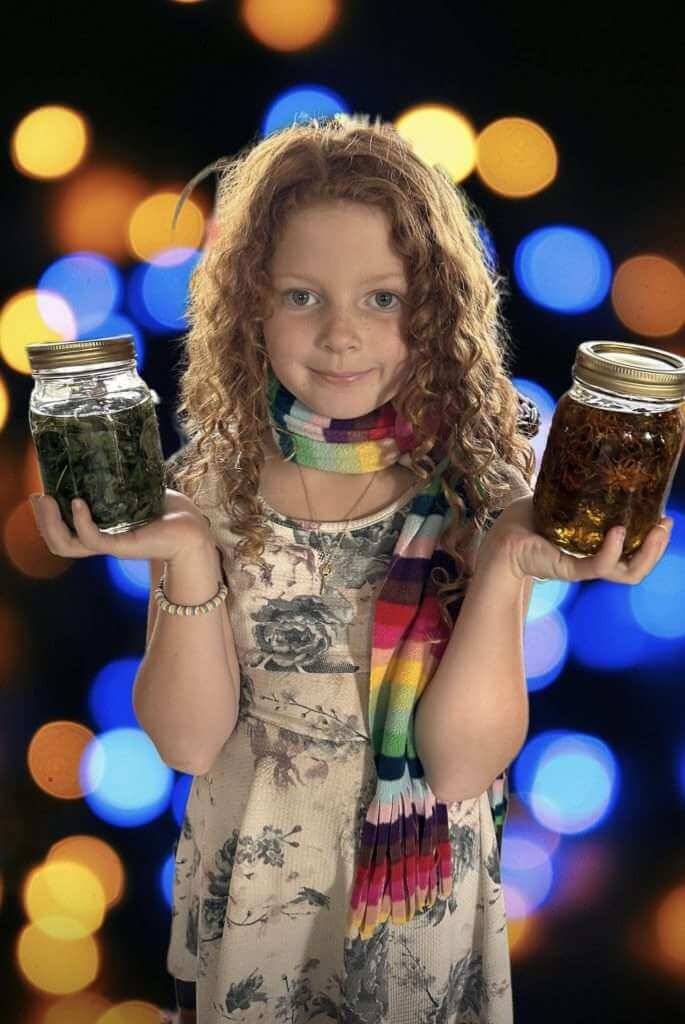
Have you ever wandered around looking at plants on the ground and wondered, “What is that all about? Could I eat it?” I do, constantly. I love growing my own food, but I especially love food that just grows itself for free—like the mullein that found its way into my garden a few years back.
I was doing some end-of-season lazy weeding, and here was this fuzzy-leafed beauty. Something tickled at the back of my brain, saying, “Let’s wait and see.” That’s the thing about plants, you have to spend some time amongst them to really learn their ways.
I think there is this tendency to just categorize what pops up around us in really broad terms: things I planted are to be kept, and everything else is a weed to pull up or mow down. But because I didn’t look at that mullein as something to be ripped up, because I let my curiosity lead me on a knowledge quest, I learned about its benefits and uses.
Now my nine-year-old makes tea and tinctures with it. She became enthralled by the idea of foraging last spring and now tells people that she’s halfway to being a herbalist. I’ve completely encouraged this. I’m naturally curious about it myself, and that mullein tincture really came in handy through the winter.
I’ve always kept identification books around for various bits of our natural world, but my favourite way to glean information with confidence comes from more hands-on, in-person learning. That’s why I’ve taken part in a number of sessions with Kate MacQuarrie.
If you have even the slightest curiosity about edible wild plants, animal tracks, or general ecology of PEI, you probably follow MacQuarrie on social media. A professional biologist and trapper, recreational angler, fisher, fossil hunter and an old school historian, MacQuarrie is the brain behind PEI Untamed and a wealth of knowledge. I’ve also heard she has a forthcoming book, Wild Foods of Prince Edward Island. I will be buying it!
We began our walk at MacQuarrie’s property, greeted by her beautiful dogs and a charm of hummingbirds. Fifteen to twenty of us were eager to wander the woods and fields with an expert and our notebooks. Over a few hours, we were offered the knowledge of over 30 plants along the way. Recipes and wise warnings for consideration were mixed in, like: always wash your duckweed really well, and that cattails are bioaccumulators so make sure you collect them near running water or springs. Or that old man’s beard can be chewed for a toothache.
We moved at a reasonable enough pace so that everyone got pictures when they wanted and questions were thoroughly answered.
I’ve attended a number of MacQuarrie’s free talks, but I highly recommend you sign up for a session. The breadth of knowledge packed into them is immense, and the locational aspect is an integral part of the learning process.